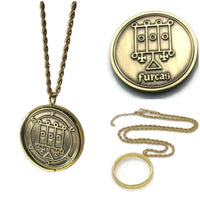
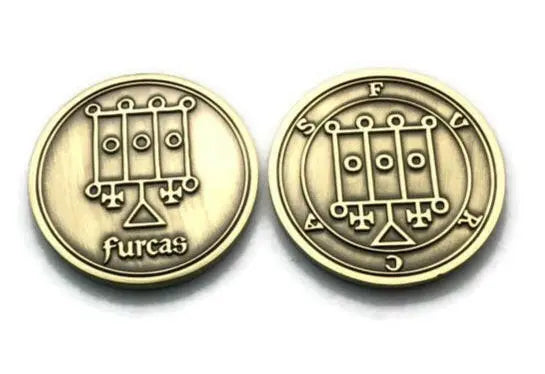
Furcas demon sigil coin Ars Goetia features a double sided brass design inspired by classical Solomonic manuscripts. This coin presents traditional sigils associated with Furcas, offering a detailed collectible for those interested in historical symbolism and Western esoteric traditions.
Furcas Demon Sigil Coin - Meaning and Historical Context
This Furcas demon sigil coin is based on traditional sources such as the Lesser Key of Solomon. Furcas is described as a Knight within the Ars Goetia, associated with structured knowledge and symbolic interpretation.
Furcas sigil: drawn from classical manuscripts
Ars Goetia: historical grimoire of spirit hierarchies
Knight classification: part of traditional systems
Symbolic design: focused on structure and calligraphic form
Because of this structure, the coin serves as both a collectible and a study piece.
Primary Sigil of Furcas (Side 1)
The front side displays the primary seal associated with Furcas. This design is based on traditional illustrations found in historical texts.
The sigil reflects structured line work and symbolic arrangement. It is often studied for its visual composition and historical significance.
Alternate Furcas Sigil (Side 2)
The reverse side presents an alternate historical rendering of the Furcas sigil. This version appears in variant manuscript traditions and comparative studies.
By comparing both sides, collectors and researchers can observe differences in symbolic representation. This adds depth to the study of sigil variations.
Historical Context
Furcas is listed as the fiftieth spirit in the Ars Goetia. Classical texts associate this figure with philosophy, logic, rhetoric, and structured disciplines.
These associations reflect a symbolic connection to knowledge and intellectual systems within historical esoteric literature.
Craftsmanship and Material
This coin is made from durable brass with a gold tone finish. The material provides strength while maintaining a classic and collectible appearance.
In addition, the engraving highlights fine details of both sigils. This ensures clarity and precision for study and display purposes.
Product Details
Material: brass
Color: gold tone
Diameter: 1.50 inches
Thickness: 2.9 mm
Weight: 0.8 oz
Design: double sided engraving
Packaging: PVC coin sleeve
This Furcas demon sigil coin is designed for durability, historical detail, and collectible value.
Intended Use
This coin is created for collection, display, and educational study. It is suitable for those interested in historical manuscripts, symbolic systems, and Western esoteric traditions.
No rituals or instructions are included or implied.
Learn More About the Ars Goetia
This coin is part of the Ars Goetia series. Visit the full reference page to explore all 72 seals from the Lesser Key of Solomon.
Deeper Meaning of Furcas
Furcas occupies the fiftieth position in the Ars Goetia and holds the rank of Knight, a distinction that sets this spirit apart from all others in the catalogue. Furcas is the only Knight among the 72 listed spirits, a classification that in classical demonological theory implied a specific relationship to disciplined, methodical service and the practical application of knowledge. This singular rank has prompted scholarly discussion about whether it reflects a deliberate compositional choice by the grimoire's compilers or the assimilation of an older spirit tradition using a different classificatory vocabulary. The Lemegeton describes Furcas as appearing in the form of a cruel old man with a long beard and a hoary head, riding upon a pale-coloured horse, with a sharp weapon in his hand. This iconographic package echoes medieval and Renaissance personifications of Saturn: the aged male figure, the blade (Saturn carries a scythe), and the pale or dark horse all belong to a shared symbolic vocabulary that characterized Saturnine influence across astrology and natural philosophy from the classical period through the Renaissance. The astrological attribution of Furcas to Sagittarius 5-9 degrees introduces a Jupiterian counterpoint to the Saturnine iconography, a tension that mirrors broader Renaissance debates about the relationship between disciplined restriction and expansive inquiry in intellectual life. The Lemegeton says he teaches the arts of philosophy, astrology, rhetoric, logic, cheiromancy, and pyromancy, in all their parts and perfectly, which situates Furcas within the encyclopedic tradition of Renaissance learned magic, where mastery of both the theoretical disciplines of the liberal arts and the practical techniques of divinatory inquiry was considered the mark of genuine wisdom. Furcas commands 20 legions of spirits. The sparse, elongated geometry of the sigil contrasts with the denser seals of higher-ranking spirits, perhaps reflecting the Knight's more focused and specialized domain of authority.
Frequently Asked Questions
What makes Furcas unique among the 72 spirits of the Ars Goetia?
Furcas holds the rank of Knight, making this spirit the sole Knight among all 72 spirits catalogued in the Ars Goetia. This singular rank sets Furcas apart from all other Goetic spirits, which hold the ranks of King, Duke, Prince, Marquis, President, or Earl. The unique Knight designation has prompted scholarly discussion about whether it reflects a deliberate compositional choice or the assimilation of a distinct older spirit tradition.
How does Furcas appear in classical manuscript descriptions?
Classical manuscripts describe Furcas as appearing in the form of a cruel old man with a long beard and a hoary head, riding upon a pale-coloured horse, with a sharp weapon in his hand. This iconographic combination echoes medieval and Renaissance personifications of Saturn: the aged male figure, the blade, and the pale horse all belong to a shared symbolic vocabulary that characterized Saturnine influence across astrology and natural philosophy.
What subjects is Furcas associated with in the Lemegeton?
The Lemegeton says Furcas teaches philosophy, astrology, rhetoric, logic, cheiromancy (palm reading), and pyromancy (divination through fire), in all their parts and perfectly. This broad curriculum situates Furcas within the encyclopedic tradition of Renaissance learned magic, where mastery of both the theoretical disciplines of the liberal arts and the practical techniques of divinatory inquiry was considered the hallmark of genuine wisdom.
What is the significance of Furcas's aged appearance in manuscript iconography?
The aged appearance of Furcas (a cruel old man with a long beard and a hoary head) connects this spirit iconographically to Saturnine symbolism, where the aged figure represented the accumulated weight of time, disciplined mastery through long practice, and the severity of Saturnine planetary influence in Renaissance astrological thought. The cruelty implied in the description reflects the stern, demanding character attributed to Saturn as a planetary force in classical and Renaissance scholarship.
What is the astrological attribution of Furcas in the Ars Goetia?
Furcas is attributed to Sagittarius 5-9 degrees in classical astrological demonology. This places Furcas within the first decan of Sagittarius, a sign traditionally associated with Jupiter and the pursuit of philosophical and spiritual knowledge. The Sagittarian attribution introduces a Jupiterian expansiveness to Furcas's domain that counterpoints the Saturnine severity of the spirit's iconographic presentation, reflecting the nuanced astrological complexity of Renaissance demonological classification.
Related Ars Goetia Seals
Bael (King, #1) | Agares (Duke, #2) | Vassago (Prince, #3) | Samigina (Marquis, #4) | Marbas (President, #5) | Botis (President/Earl, #17)