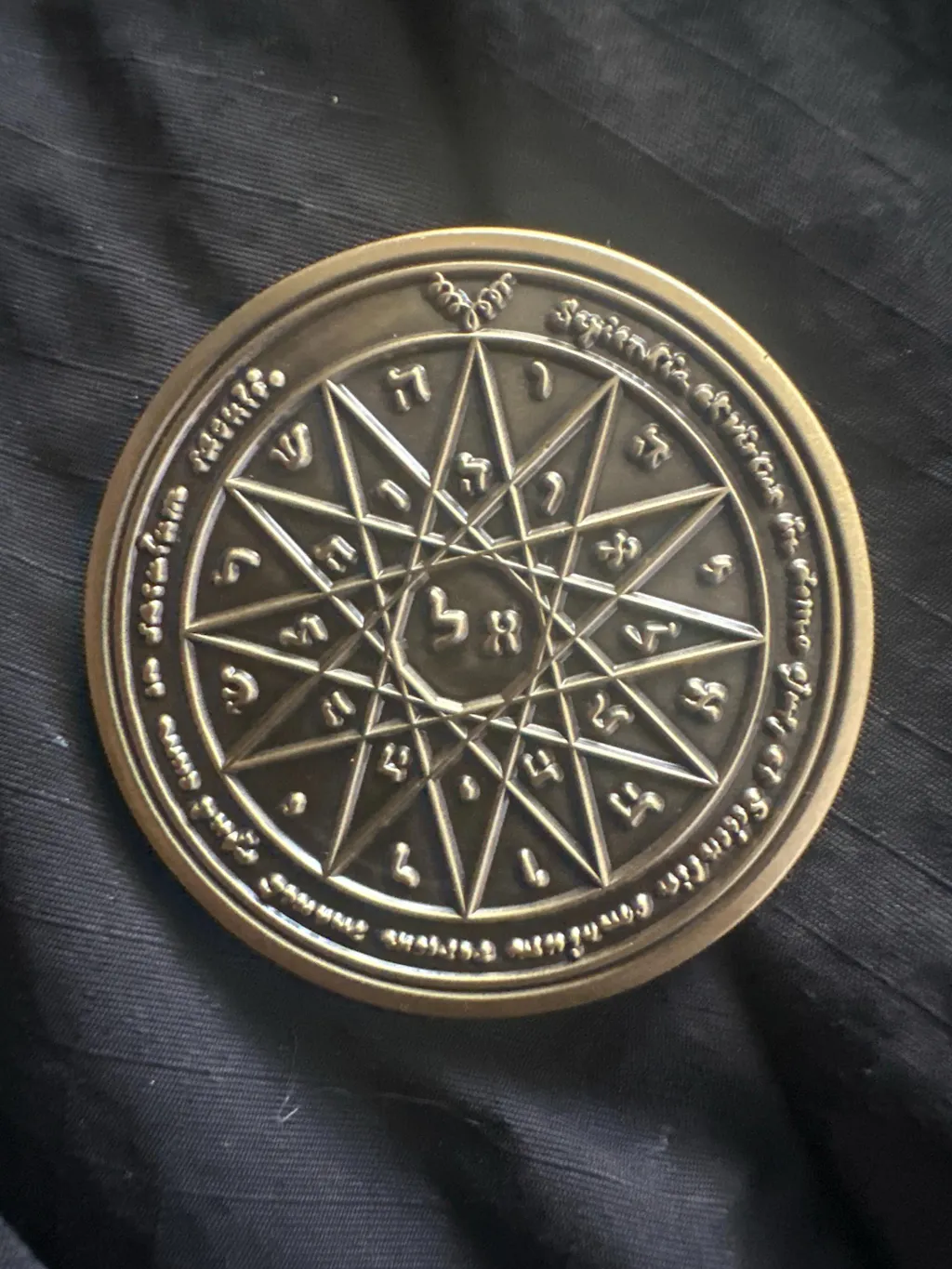
King Solomon Seals: History, Meaning and the 44 Seals Explained
The 44 Seals of King Solomon: History, Meaning and Origins
By King Solomon Coin Editorial Team • Last updated: June 2026
King Solomon remains one of the most discussed figures in ancient literature and sacred history. Honored in Jewish, Christian, and Islamic traditions, he is remembered as a ruler associated with wisdom, justice, and thoughtful leadership.
Centuries after his lifetime, a body of symbolic designs became linked with his name. Today these are widely known as the 44 Seals of King Solomon, often referred to as pentacles within the Solomonic tradition.
This article explores both the historical figure of Solomon and the symbolic system that later developed around his legacy. Find the right seal for protection, wealth or wisdom
On this page
- Who Was King Solomon?
- The Origin of the Seals of Solomon
- How the 44 Seals Are Structured
- The 44 Seals of King Solomon, Explained
- Why There Are 44 Seals
- Practical and Modern Interpretations
- Why Interest in Solomonic Seals Continues to Grow
- A Shared Cultural Legacy
- Frequently Asked Questions
- Explore the 44 Seals of King Solomon

Who Was King Solomon?
Traditionally described as the son of King David, Solomon ruled during a period associated with stability and cultural development in ancient Israel. His reign is often linked with the construction of the First Temple in Jerusalem and the flourishing of literature and administration.
One of the most well known accounts of his life is the judgment of two women claiming the same child. His response revealed discernment and compassion, and the story became a timeless symbol of wise leadership.
Texts traditionally associated with him, including Proverbs and Ecclesiastes, reflect themes such as:
- The value of wisdom over wealth
- The importance of humility
- The temporary nature of material success
- The search for meaning in life
Across traditions, Solomon represents discernment and moral insight rather than power alone.

The Origin of the Seals of Solomon
The 44 Seals are not artifacts from Solomon's historical era. Instead, they emerge from medieval Solomonic literature.
Texts such as the Greater Key of Solomon, compiled centuries after the biblical period, present geometric pentacles attributed to his name. These manuscripts combine sacred names, structured symbolism, scriptural references, and planetary associations.
Scholars view these works as part of medieval intellectual and symbolic history. While tradition connects them to Solomon's legendary wisdom, the seals themselves belong to a later historical development.

How the 44 Seals Are Structured
The 44 Seals form a structured symbolic system, organized by the seven classical planets of traditional astrology.
For the full list organized by planetary group, see the 44 Seals reference guide.
Each pentacle is traditionally associated with one of the classical planets:
Within this planetary framework, the seals are linked to themes such as protection, clarity, wisdom, prosperity, justice, discipline, and harmony. What distinguishes these pentacles is their combination of precise geometric patterns, sacred names, angelic attributions, and symbolic inscriptions. The structure reflects order and intentional design rather than randomness.
The 44 Seals of King Solomon, Explained
Below is the complete set of 44 seals, grouped by planet in their traditional order. Each entry links to that seal so you can study its design and inscription. These descriptions reflect how the seals are presented in the Key of Solomon and in later symbolic study; they describe traditional associations, not guaranteed outcomes.
Pentacles of Jupiter (7)
Traditionally associated with prosperity, authority, justice, and protection. In Solomonic tradition, Jupiter represents expansion, wisdom, and beneficial influence.
- First Pentacle of Jupiter — traditionally associated with gaining resources and favorable opportunities.
- Second Pentacle of Jupiter — traditionally associated with honor, prosperity, and peace of mind.
- Third Pentacle of Jupiter — traditionally associated with protection and defense.
- Fourth Pentacle of Jupiter — traditionally associated with wealth and recognition.
- Fifth Pentacle of Jupiter — traditionally associated with vivid dreams and spiritual vision.
- Sixth Pentacle of Jupiter — traditionally associated with protection from worldly dangers.
- Seventh Pentacle of Jupiter — traditionally associated with relief from poverty and want.
Pentacles of the Sun (7)
Traditionally linked with honor, recognition, vitality, and illumination. In classical symbolism the Sun represents leadership, clarity, and the visible expression of light.
- First Pentacle of the Sun — traditionally associated with divine presence and sacred vision.
- Second Pentacle of the Sun — traditionally associated with humility and the restraint of pride.
- Third Pentacle of the Sun — traditionally associated with honor, standing, and visibility.
- Fourth Pentacle of the Sun — traditionally associated with vitality and renewal.
- Fifth Pentacle of the Sun — traditionally associated with protection during travel.
- Sixth Pentacle of the Sun — traditionally associated with discretion and remaining unseen.
- Seventh Pentacle of the Sun — traditionally associated with liberty and release.
Pentacles of Mars (7)
Associated with courage, defense, and strength. In traditional symbolism Mars represents decisive action, protection, and the ability to withstand opposition.
- First Pentacle of Mars — traditionally associated with strength and the protective force of Mars.
- Second Pentacle of Mars — in the Key of Solomon, described in connection with health and wholeness.
- Third Pentacle of Mars — traditionally associated with steadiness amid opposition and discord.
- Fourth Pentacle of Mars — traditionally associated with perseverance and prevailing through difficulty.
- Fifth Pentacle of Mars — traditionally associated with resolve in the face of hostile forces.
- Sixth Pentacle of Mars — traditionally associated with protection and the turning back of harm.
- Seventh Pentacle of Mars — traditionally associated with the elemental power of Mars.
Pentacles of Saturn (7)
Traditionally connected with structure, discipline, boundaries, and deep transformation. Saturn represents limitation, seriousness, and lasting change.
- First Pentacle of Saturn — traditionally associated with command and steadiness over unseen forces.
- Second Pentacle of Saturn — traditionally associated with resilience against adversity.
- Third Pentacle of Saturn — traditionally associated with protecting one's home and possessions.
- Fourth Pentacle of Saturn — one of the severe Saturnian seals in the Key of Solomon, included here for historical and symbolic study.
- Fifth Pentacle of Saturn — traditionally associated with defense and protection.
- Sixth Pentacle of Saturn — one of the severe Saturnian seals, presented for completeness and historical study.
- Seventh Pentacle of Saturn — traditionally associated with the nine angelic orders and the awe of creation.
Pentacles of the Moon (6)
Linked with intuition, dreams, travel, water, and the hidden aspects of reality. Lunar symbolism relates to cycles, reflection, and subtle perception.
- First Pentacle of the Moon — traditionally said to open doors and locks, however they are fastened.
- Second Pentacle of the Moon — traditionally associated with protection against perils by water and the calming of storms.
- Third Pentacle of the Moon — traditionally associated with safety in travel and protection against dangers by night.
- Fourth Pentacle of the Moon — traditionally framed as defense from harm to body or soul, and linked with knowledge of herbs and stones.
- Fifth Pentacle of the Moon — traditionally associated with restful sleep, relief from nightmares, and answers through dreams.
- Sixth Pentacle of the Moon — traditionally associated with rain and the waters of the deep.
Pentacles of Mercury (5)
Traditionally associated with communication, knowledge, learning, and mental clarity. Mercury symbolizes intellect, language, and the movement of ideas.
- First Pentacle of Mercury — traditionally associated with personal magnetism and presence.
- Second Pentacle of Mercury — traditionally described as a seal for seeking what seems out of reach.
- Third Pentacle of Mercury — traditionally associated with writing, speaking, learning, and skill with words.
- Fourth Pentacle of Mercury — traditionally associated with knowledge, understanding, and insight.
- Fifth Pentacle of Mercury — traditionally associated with opening doors of any kind and removing obstacles.
Pentacles of Venus (5)
Traditionally linked with attraction, harmony, beauty, relationships, and emotional connection. Venus represents grace, affection, and social balance.
- First Pentacle of Venus — traditionally associated with friendship and goodwill.
- Second Pentacle of Venus — traditionally associated with grace, honor, and matters of the heart.
- Third Pentacle of Venus — traditionally associated with attracting love, respect, and admiration.
- Fourth Pentacle of Venus — traditionally associated with drawing a desired person closer.
- Fifth Pentacle of Venus — traditionally associated with harmony and affection.
The 44 Seals of King Solomon are offered as symbolic and historical designs. They are meaningful objects for reflection and personal intention, not a promise of any specific outcome, and they are not a substitute for medical, legal, financial, or professional advice.
Why There Are 44 Seals
The number 44 reflects the set of pentacles preserved across various manuscript traditions of the Solomonic corpus: seven each of Jupiter, the Sun, Mars, and Saturn, six of the Moon, and five each of Mercury and Venus. While editions may vary slightly in presentation, the core grouping of seals remains consistent in the historical record.
Practical and Modern Interpretations
In contemporary spiritual and symbolic study, interpretations vary widely.
Some approach the seals as:
Meditative Anchors
Used as visual focal points for concentration and inner discipline.
Ritual Symbols
Historically inscribed on metal or parchment within ceremonial frameworks.
Personal Talismans
Carried or worn as reminders of clarity, structure, and focused intention.
Others appreciate them purely as historical and cultural artifacts that reflect medieval approaches to sacred geometry and symbolic theology.
Importantly, modern engagement with these designs often emphasizes symbolic meaning rather than literal supernatural claims.
Why Interest in Solomonic Seals Continues to Grow
Modern readers increasingly explore:
- Sacred geometry
- Ancient wisdom traditions
- Historical symbolism
- Manuscript based esoteric systems
King Solomon stands at the intersection of these interests. His legacy bridges faith traditions, historical scholarship, and symbolic study.
For collectors and students of symbolic history, seals inspired by Solomonic manuscripts serve as structured reminders of wisdom, clarity, discipline, and thoughtful leadership.
A Shared Cultural Legacy
Because Solomon is honored in multiple religious traditions, discussions about him benefit from an educational and respectful tone. His legacy can be appreciated historically and culturally without entering theological debate.
The 44 Seals of King Solomon represent a medieval symbolic tradition inspired by his legendary wisdom. Whether studied as historical designs or appreciated as structured symbolic art, they continue to inspire curiosity and reflection.
Frequently Asked Questions
What are the 44 Seals of King Solomon?
The 44 Seals of King Solomon are a structured set of symbolic pentacles preserved in medieval Solomonic manuscript traditions. They are commonly studied as historical designs combining sacred names, geometric forms, and planetary correspondences.
Are the 44 Seals from King Solomon's lifetime?
No. The seals are not artifacts from the biblical era. They appear in medieval and early modern compilations attributed to Solomon, where they are presented as part of a later symbolic and ritual literature.
Why are they called "pentacles"?
In Solomonic tradition, "pentacle" is used as a general term for a sacred figure or emblem, not only a five pointed star. Many Solomonic pentacles use circles, squares, stars, and sacred inscriptions.
How are the seals organized?
The 44 seals are traditionally grouped by the seven classical planets: Sun, Moon, Mercury, Venus, Mars, Jupiter, and Saturn. Each group contains multiple pentacles associated with traditional themes and symbolism.
What is each seal traditionally used for?
Each seal is traditionally associated with a specific theme, from protection and prosperity to wisdom, love, and harmony. The section above lists all 44 with their traditional associations. These reflect historical and symbolic tradition rather than guaranteed results.
Do different manuscripts show different versions?
Yes. Manuscript families can vary in layout, presentation, and minor details. However, the overall system of grouped seals remains recognizable across the Solomonic corpus.
How do people study or use these designs today?
Modern approaches vary. Many people study them as historical sacred geometry and symbolic theology. Others use them as meditative focal points or cultural artifacts, emphasizing meaning and personal reflection rather than literal claims.
Explore the 44 Seals of King Solomon
If you are interested in learning more about these historical pentacles and their symbolic structure, start with the 44 Seals reference guide.
If you would like to explore collectible sets, you may also browse the Complete Sets and Collections.
You can also shop by intention in the Spiritual Protection Jewelry and Archangel Seal Jewelry collections.